







Ever wonder what cadence feels right on climbs? For me, the answer hit hard: it’s time to spin faster.
Why? Because at 65, racing with Team OWL toward my goal of still riding at 80+ (like our incredible Wendy Skean!) means protecting my body for decades of watts ahead. This isn’t just about today’s race—it’s about building a sustainable cycling future.
A Quick Cadence Crash Course
Cadence is basically how many times your pedals go round in a minute as you ride. It’s really that simple.
Cadence = RPM (pedal revolutions/minute). Spot it in Zwift’s top-left graphic—or count manually with a stopwatch if you feel like getting old school!
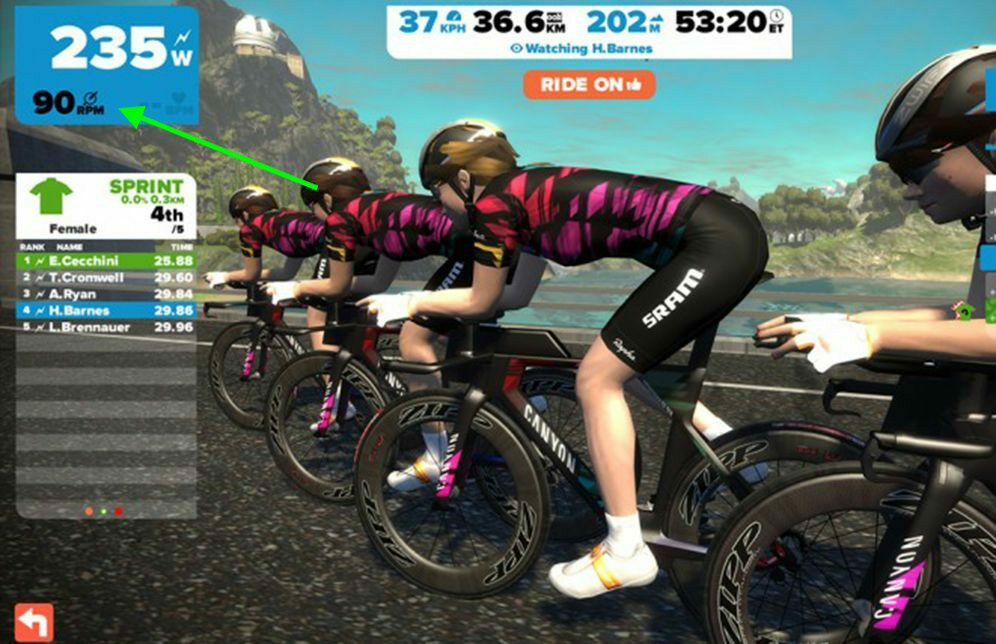
Cadence can affect many aspects of your ride, but let’s zero in on how it influences your body—specifically on climbs. When it comes to muscle endurance, cadence plays a big role. If you keep a higher cadence, you’re giving your cardiovascular system a workout. On the flip side, a lower cadence means you’re putting more of the load on your muscles.
…and that’s where my problems began.
My Mashing Wake-Up Call
Five years as Team OWL’s DS, captain, and proud “featherweight” (167cm, 50.4kg, ~150w/3w/kg), I’ve hung with teammates cranking 193w, 186w, and 174w zFTPs. That’s serious power from a 72-year-old, a 67-year-old, and a 60-year-old teammate—respectively. Hoot!
Now, here’s the data that tells the real story. During our weekly TTT races, we push 185w at the front on our pulls. For the top two riders? That’s chill because it’s below their zFTP. For our third rider? Just 6% above her FTP. But for me? It’s a whopping 34% above mine!
Just so you know, “massive watts” is kinda relative when you’re talking about a Grandmasters team!
Faced with this challenge, I put my thinking cap on and devised a strategy to stick with the team. My solution? mixing it up by spinning at 80-85 rpm in-the-saddle and throwing in out-of-the-saddle bursts of sub-70-rpm pedal mashing. Honestly, every race felt more like interval training for me!
And it worked.
Until it Didn’t…
Team OWL’s been tearing up the women’s Grandmasters race scene together for over 5 years. My game plan of low cadence to gain high watts was crushing it for three solid years—until a few years ago when the discomfort started creeping in.
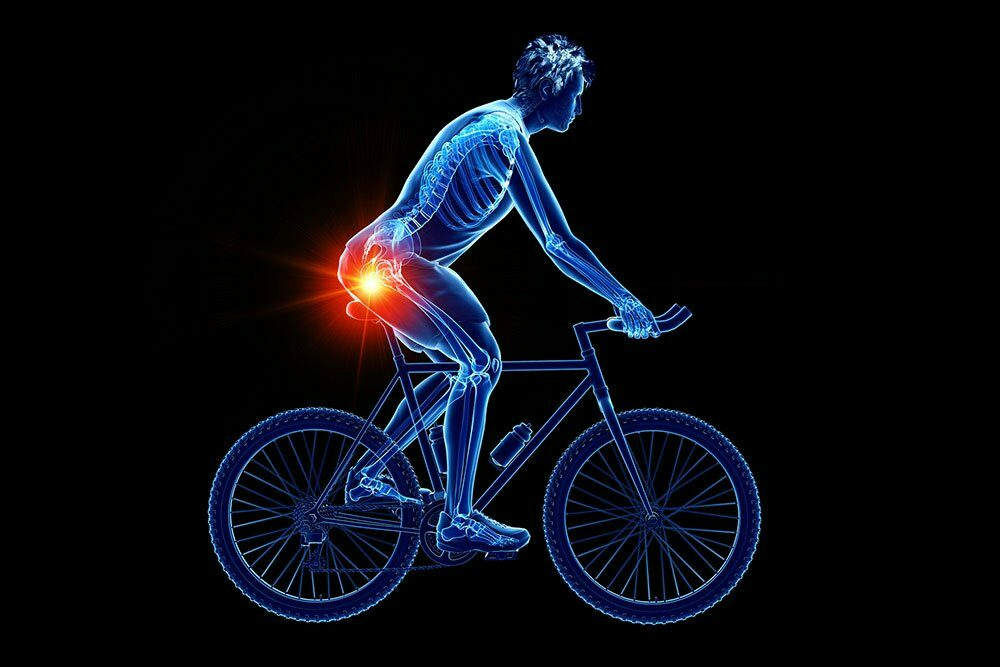
Lower back, hips, and yes, that nagging pain in the glute. It was quite literally—you guessed it—a pain in the butt!
But Wait. There’s a Cure for this, Right?
I’ve never really had to deal with chronic pain before, so I was pretty confident the docs could sort it out. And so, my adventure began.
Now, I don’t want to bore you with organ recitals (all too common in my age group!), but here’s the Cliff Notes version of my medical adventure:
- Doc visit #1: “You’re just getting old, aches are par for the course—try PT.”
- PT Round: Funky exercises, but no dice.
- MRI scan: Bones look fantastic, but surprise! High-grade ligamentum teres tear and a partial labral tear from pushing too hard. Doc’s advice? “Wait until it’s time for a hip replacement.” Reminded doc that my bones are in tip-top shape and I’m not planning on needing one ever—blank stare ensued.
- PT Round 2 + needling: Worked on stability, tried some needling with e-stim. A bit of relief!
- Epidural steroid injection: The magic bullet! Totally pain-free for our Zwift HQ TTT race and exploring Long Beach with teammates. Effects lasted about four months.
- Trigger point dry needling: My current go-to. Chills out cranky muscle fibers, gets blood flowing, no meds involved, zero side effects
Hey, remember when I mentioned that being a pedal masher can really mess things up with your body? Yeah, a labral tear is one of those nasty outcomes! A Labral tear can happen when you put too much stress on the hip joint—usually by pushing yourself too hard. Checkmark.
Here’s the kicker—even though the pain flared cycling, walking was the real troublemaker. My right glute was not happy, shooting pain right down my leg and numbness after just a few blocks.
With my trip to Long Beach coming up, I was pretty sure I’d nail the TTT at Zwift HQ, but I was seriously stressing about missing out on the fun touristy stuff with my teammates simply walking around town.
Time to take action.
A doc had suggested an epidural steroid injection months ago, but I’m all about trying every possible fix before going for what feels like the ‘big guns.’ Yeah, yeah, I get it—an ESI isn’t exactly dealing with dynamite. But hey, it’s who I am!
And it Worked!
Our TTT race was a total blast! Hanging out and exploring Long Beach with my teammates was awesome—and, best of all, I was totally pain-free!
After returning home, the magical effects of that injection lasted a good few months. Then, the annoying ache in my right glute decided to make a comeback. It feels like having a wad of muscles all tangled up inside.
Back to trigger point dry needling. It chills out those cranky muscle fibers, gets the blood flowing, kicks those pesky pain chemicals to the curb, and basically helps my muscles get back to feeling normal again.
The fix doesn’t last forever, but I can grab a treatment whenever it’s needed. Plus, since there’s no meds involved, there are zero side effects.
I can live with that.
Then I snapped…
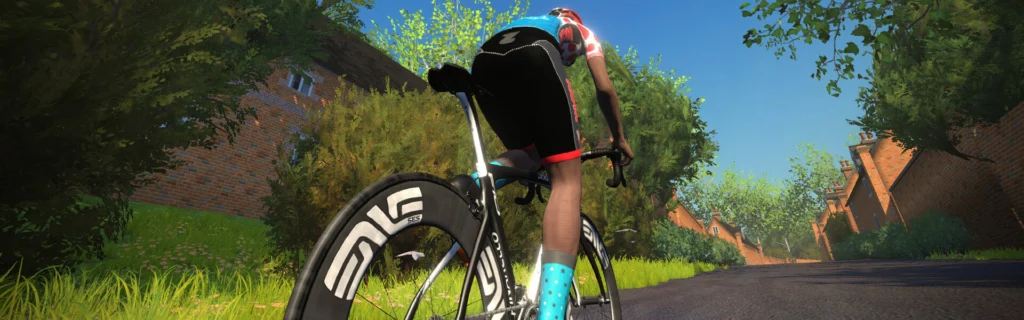
Two weeks ago we raced WTRL’s TTT on Greatest London Loop. Yeah, the one with the brutal Keith Hill Climb: 1.9 km long, averaging a 7% incline, with some parts spiking over 10%.
Two weeks ago, we raced WTRL’s TTT on Greatest London Loop. Yeah, the route with that brutal Keith Hill Climb: 1.9 km long, averaging a 7% incline, with sections spiking over 10%.
Halfway up the climb, something in my hip felt like…it snapped.
I didn’t topple off the bike in agony, so nothing major. But I definitely slowed our team down (though hey—we still snagged 3rd place!). This is where the myths start to crumble about powering through pain.
The bigger reality check hit hard.
If I don’t change things up, I can kiss racing with Team OWL goodbye.
If I don’t change things up, I can kiss racing with Team OWL goodbye!
That’s not an option. My ultimate dream? To still be racing when I hit Wendy’s age—80 years young and still riding strong!
Let’s talk muscle groups
When you’re grinding up those hills, switching up your pedaling speed means you’re putting the spotlight on different muscle groups than you would at a slo-mo pace.
Translated: you change the emphasis on certain muscle groups when climbing at a high cadence versus a low cadence.
| Cadence | Primary Joint/Muscle Emphasis | Details |
|---|---|---|
| Low Cadence | More Hip/Glute Engagement | At lower cadences (≤60 rpm), the hip joint (glutes, hip extensors) contributes more to power. |
| High Cadence | More Knee/Quadriceps Engagement | As cadence increases (≥80 rpm), the knee joint (quadriceps) takes on a greater share of the work. |
While pedaling slowly can tire out your muscles, cranking up the speed makes your heart and lungs work harder. The upside? Spinning those pedals faster can give your stamina a real boost.
Honestly, I’ve often considered that maybe I’ve been mashing those pedals because my endurance just isn’t up to par. Another great reason to retrain my climbing style!
| Cadence Type | Main Benefit |
|---|---|
| High Cadence | Greater cardiovascular involvement, improved aerobic capacity, reduced muscular fatigue, better efficiency |
| Low Cadence | Greater muscular strain, faster fatigue, less sustainable for long efforts. |
So What’s My New Game Plan?
It’s super simple and boils down to this: Spin those pedals faster!
When you mash at low cadences, your hip joint and glutes do the heavy lifting. At higher cadences (80+ rpm), the knee and quadriceps take on more of the work. The shift sounds small, right? But it packs a punch!
I managed to squeeze in two training rides outside this week. The route has multiple steep sections to tackle. On the flat parts, I kept my cadence humming between 90-100, which is pretty much common for me.
The real challenge was the hills. Instead of going all-out in a hard gear like I normally would—channeling my inner Jan Ullrich with that low-cadence, big-gear grind—it was time to switch things up. I dropped into an easier gear and kept my cadence above 95 the whole way up.
Honestly? It was a blast!
Yeah, I know—Jan Ullrich’s rival Lance Armstrong was all about that high cadence, often keeping it between 100 and 110 rpm on those climbs.
So, I’ll practice channeling my inner Lance, focusing on high cadence and building a different kind of strength. But don’t worry—I’ll stick to the old school way. No motor doping for me, that’s for the new kids on the block!
It’s not about climbing faster…
Here’s the thing: this isn’t just about climbing faster. It’s about climbing smarter—protecting my body so I can keep showing up, keep pedaling, and keep racing with my OWLs for years to come.
Bottom line—knowledge is power. Understanding how cadence affects your body, recognizing when your current strategy is unsustainable, and having the courage to make a change? That’s what keeps us in the saddle for the long haul.
The data backs it up, the experience confirms it, and I’m living proof of both. Time to spin those legs, OWLs!
Stay tuned as I continue to explore the data and share insights that empower every woman to thrive!
Now go find those rollers and let your heart take the lead!

Follow me on substack »
Zwift for the Rest of Us
Elizabeth Evans
Thank you for this valuable information :) I realized that hills are my problem area when racing on Zwift. I have been trying a faster cadence at an easier gear. Sometimes it works for me, sometimes it doesn’t. I know that my joints can’t take the harder gears forever. I’ve only been working on this for a few weeks, but I hope to see improvement as time goes by.
elaine
As DS for Team OWL, I get a front-row seat to the unique talents each of my teammates brings to the table. Some soar up the climbs like mountain goats, while others absolutely own the flats. We can all work on getting better at everything, but it’s important to give a little love to our natural strengths! And yes, body type really does play a role in who excels on climbs (myth buster: it’s not always the lightest rider! More on that in another article!).
The big thing with climbing? Listen to your body! If your joints or muscles start complaining, it’s time to switch things up. That’s the secret to keep riding for many years to come!
Andy
Thank you for this valuable words!
As I’m tiny I was always better at endurance than at strength. Later in my medical studies I’ve learned, that it’s not a matter of size but on gender. Short: The muscle fiber type relation differs in men and women, so men are mostly stronger but more fatigable. A good explanation is found here: https://pmc.ncbi.nlm.nih.gov/articles/PMC4285578/
Sure, hormons as estrogen and testostrone have an impact, so as OWLs in menopause our strength can grow (when we do excercise!), but the fibre structure remains for sure.
For me in conclusion it’s normal that my riding behaviour is other than of my male neighbour. I’m better climbing sitting and with higher cadence. Lower cadence I only use, when I’m in my lowest gear and I have to grind. ;-) He climbs better with lower cadence and standing. Nevertheless I do workouts with high and low cadence to increase my overall power.
If you watch the Pros (as you mentioned Lance and “Ulle”), there are individual preferences too, in men and women. As I watch, most female riders climb with higher cadence and sitting, only in special situations like hairpins with a standing power effort.
So for all of us it’s a good advice to mind our female body structure and to keep in mind our individual “natural power and empowerment” in training.
Cheers!