






A quick heads up: This piece lives in our IMHO section—which means it’s pure opinion. I’ve got thoughts about what went down with Lorena, and I’m sharing them here. Read it as my take on the situation, not gospel. The facts are what they are, but how I’m interpreting them? That’s all me. Read it as one cycling fan’s perspective on a frustrating moment in the sport.

18 Grams: A Rounding Error That Cost Everything
The pursuit of speed in professional cycling is a beautiful obsession. Marginal gains—a concept coined by Dave Brailsford at Team Sky and later perfected at Ineos Grenadiers—has become the philosophy of the modern peloton. Every tenth of a watt, every gram saved, every aerodynamic tweak—it all matters.
But sometimes, that obsession goes too far. Lorena Wiebes found out just how far when her bike was flagged as 18 grams underweight at the Giro d’Italia Women. One disqualification later, and she was out of the race entirely.
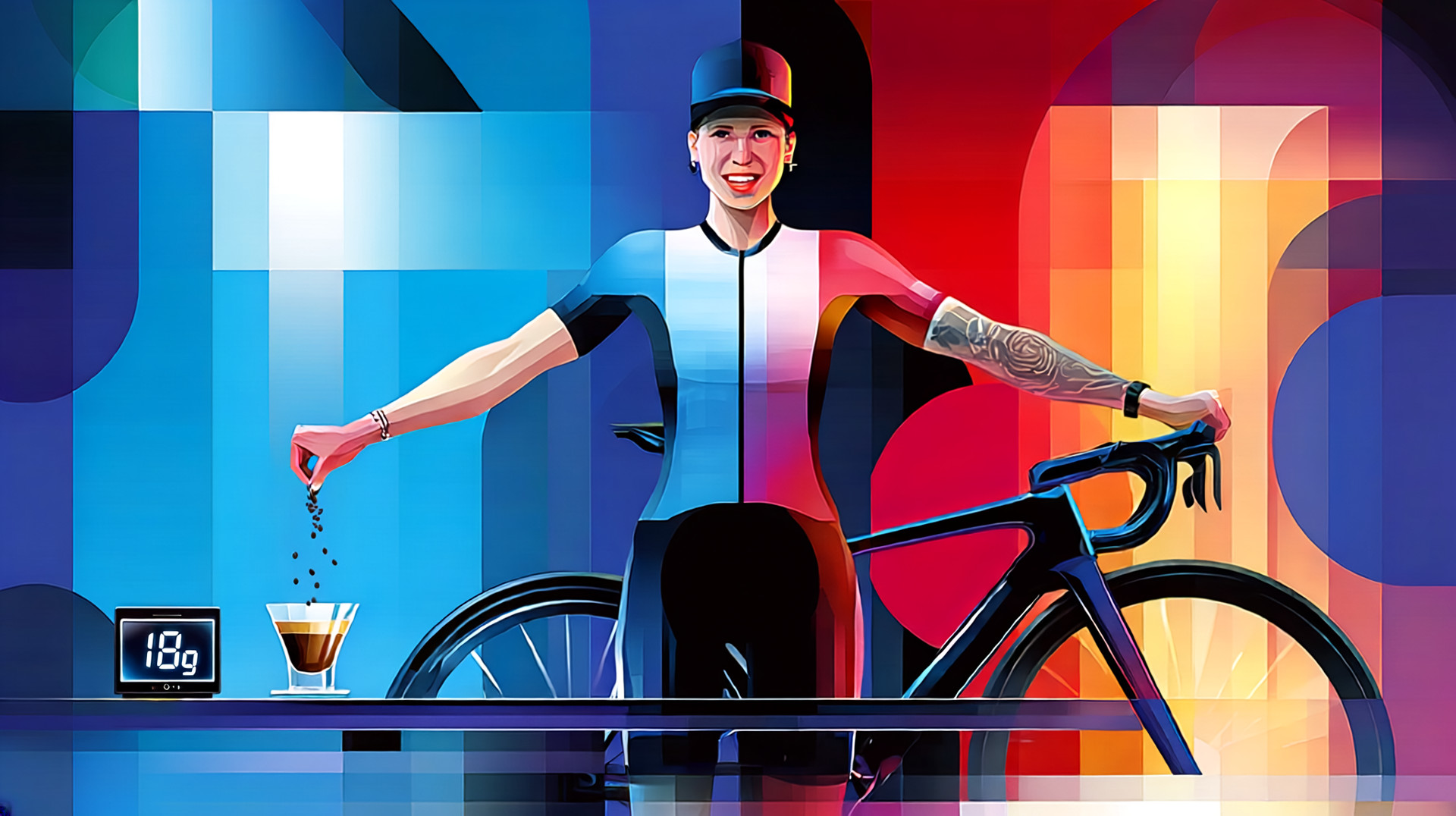
Let me put 18 grams into perspective for you: it’s the exact amount of coffee I grind every morning for my single espresso shot. It’s barely noticeable. Yet somehow, this invisible margin was enough to end the race for one of the world’s best cyclists.
The Rule is the Rule
Here’s where I’m probably going to lose some of you: I don’t think the disqualification was unfair.
Yes—it feels harsh. And yeah, 18 grams is hilariously small. But rules exist for a reason, and they only work if everyone follows them. The UCI set a minimum weight limit, and that limit exists to keep the sport on a level playing field.
The hard truth is this: when you break a rule, there are consequences. That has to apply to everyone, regardless of how big a star you are or how small the infraction. The moment you make exceptions, the rules stop mattering.
When you break a rule, there are consequences. That has to apply to everyone, regardless of how big a star you are or how small the infraction
The Conspiracy Theories
Naturally, the cycling internet exploded with theories. Some of the chatter went into full conspiracy mode—claims that because this was an Italian race, officials wanted an Italian winner (Elisa Balsamo), and the easiest way to make that happen was to eliminate Wiebes.
I’m not buying it. It gives too much credit to some grand plot when a simpler explanation is likely the correct one.
That said, there are some more credible theories worth discussing.
The Gender Question
Would a male superstar have been ejected from the entire Giro for the same infraction? Honest answer? Probably not. There’s a conversation to be had about whether the rules are applied consistently across the peloton, and whether women’s racing gets treated differently when it comes to enforcement. But that’s a different article.
The Measurement Question
Multiple sources have suggested the weighing process itself might have been inconsistent—that the equipment wasn’t properly calibrated. If that’s true, it should be easy to prove.
Here’s what the investigation would look like: Compare Lorena’s pre-race bike weigh-in (which apparently passed) against other riders’ bikes weighed on the exact same scale. Then cross-reference those same riders’ post-race bike weights, also weighed on the same scale used for Lorena’s. If their bikes also dropped 18 grams or showed similar discrepancies, then yes—we’re looking at a calibration error.
But if only Lorena’s bike lost weight between weigh-ins, we need to ask some harder questions:
Did she swap bikes during the race? Was her pre-race bike the same one that was weighed post-race? If not, that changes everything.
What about the variables? Bike weight isn’t as static as we might think. Tire sealant, for instance, can fluctuate based on temperature and the intensity of riding. During a high-speed race, sealant can redistribute and even evaporate slightly under heat stress—potentially shedding a few grams. Air temperature and humidity also play a role. A bike weighed on a cool morning versus one that’s been ridden hard in summer heat can show measurable differences. Even atmospheric pressure can theoretically affect scale readings, though marginally.
The point is: 18 grams is within the noise margin of all these variables.
This is where the real investigation should start—with data.
The Self-Sabotage Angle
Some fans think SD Worx knowingly built the bike under the limit and are now playing victim to deflect blame. Maybe. But that’s speculation, not evidence.
But here’s the real question: What if that bike was built with a razor-thin margin of error for minimum weight—one so tight that it was vulnerable to the elements? What if sealant temperature changes, atmospheric shifts, or other variables pushed it just under the line during the post-race weigh-in? Even if it wasn’t intentional sabotage, someone still made the decision to build a bike on the thinnest possible edge. And if that’s the case, we need to talk about who bears responsibility for that decision.
The Real Problem: Management
Here’s where I’m placing the blame—squarely on SD Worx management.
Was there a directive from the top to build Lorena’s bike right at the edge? To squeeze every last advantage? If so, the mechanics were just following orders. They’re not the ones making strategic decisions; they’re executing mandates. The problem is that playing this close to the line is insane.
Think about all the variables: tire pressure fluctuating with temperature, sealant levels changing, atmospheric conditions affecting weight, even humidity. You’re gambling with margins so small that a single unknown variable can push you over. That’s not marginal gains—that’s recklessness.
That’s not marginal gains—that’s recklessness
Any competent management should have looked at that situation and said, “No. We’re building a bike that’s 50 grams over the limit, minimum. The risk isn’t worth it.” But someone didn’t. Someone made the call to push it, and now Lorena is paying the price for a decision made by management.
The Real Victim
Let’s be clear: Lorena is the one who got hurt here.
Her reputation took a hit. Her UCI points disappeared. Her momentum in a Grand Tour vanished. For what? A decision made by management that she may not have even known about. She was the one racing—the one who took Stage 1 of the 2026 Giro d’ Italia Women. And she got disqualified because someone higher up decided to gamble with millisecond margins.
If Lorena wants to be angry—and she absolutely should be—that anger needs to be directed at the people who put her in this position
If Lorena wants to be angry—and she absolutely should be—that anger needs to be directed at the people who put her in this position. Not the UCI for enforcing the rules. Not the Italian organizers for some imagined conspiracy. Her anger should be directed to at SD Worx management who made the call to build a bike that was operating on the thinnest possible edge.
That’s where the real failure is.
Your Turn
I’ve made my case—blame lands on SD Worx management for gambling with such a thin margin. But what do you think? The cycling world has plenty of opinions on this one. Share yours below—I’d love to hear your thoughts.

Follow me on substack »
Zwift for the Rest of Us
Maria
I agree entirely with you Elaine and feel that the SD Works management team have let Lorena down gambling with such a fine margin. Rules are not made to be broken. They’re to make racing fair.
Terry
I have read many viewpoints / opinions on this and my biggest concerns are still with the UCI and their weighing procedure / equipment. It is impossible to know what is true in what I read, but reportedly this bike was used for numerous races and always came in at weight – there was a 50 gram difference between before race and after race weigh in – the team was not asked to sign off on the results -and on it goes. I agree about rules being rules, but there is a lot that needs to be explained when there was such a consequential penalty.